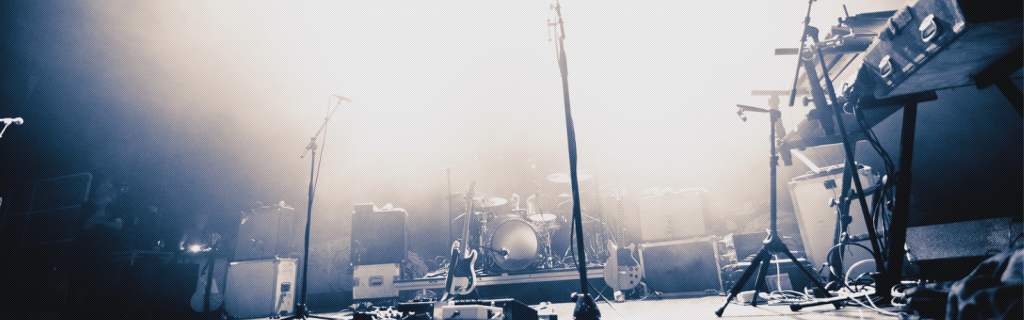
Why not start a blog article with a lullaby?
"Au clair de la lune,
Mon ami Pierrot,
Prête-moi ta plume
Pour écrire un mot."
The origin of this work is unclear. What is known is that Édouard-Léon Scott de Martinville made the first sound recording of "Au clair de la lune" in 1860. However, with the small disadvantage that it could not be played back. That was about as practical as having a Spotify account without a smartphone, and so it took the inventiveness of Thomas Alva Edison and later Emil Berliner before the first gramophone appeared on the shelves of the MediaMarkt in 1887. Until then, anyone who wanted to hear a lullaby had to sing it to themselves. Or lie down somewhere in the moonlight where one was being sung. Until then, music was made exclusively by real people with real musical instruments. That was just 135 years ago, so Keith Richards will still remember it vividly.
TOO LAZY TO READ ON? THEN LISTEN TO ME:
In the blogcast, I read this recent blog article to you. With emphasis, of course!




I'm still not a cultural pessimist, and I'm not hung up on the good old days, but the thought that we've lost all kinds of good things at a gallop in the course of progress is creeping up on me with increasing frequency. Making music together, for example. Who does that anymore? Away from the professional world of studios and stages. Home music, with each other. Just like that. Not because you can do it better, or because it sounds better than the music played on recordings and streams. But because it's fun. Not just like that, but for this, the very best reason.
Or: first make music with yourself alone, just because it's fun? When you learn to play a musical instrument, you learn - as if that weren't enough on its own - a whole lot more than how to play. However, many of us did not have particularly edifying experiences with it in our childhood. On the contrary! The thought of the weekly recorder lesson, of violin or piano lessons often triggers memories of compulsion, torment and embarrassment, one wants to throw oneself headlong off the top rung of the scale, from the very high C down. Having to practise!?! Not be able to do something?!? Not again!!! Showing off one's skills and being shown off - under the Christmas tree, at Grandma's birthday, at the final concert: people are happy! Above all, they're happy when it's finally over. You yourself are the happiest of all and hide behind the curtain.
Nowadays, many people want to spare their children this kind of musical trauma. And rightly so. Unfortunately. That's why many only know high C from juice bottles and Ariana Grande.
Summer of '79
I was sentenced to play the recorder (C and F) as an elementary school kid and hated it. In grammar school I wanted to play the guitar myself and - to quote Bryan Adams:
I got my first real six string
Bought it at the five and dime
Played it till my fingers bled
Was the summer of '69
For me, it was more the Summer of '79, but that didn't dampen my unbridled zeal, although it did eat up a huge portion of my time budget for school learning. My day also only had 24 hours.
I taught myself to play the guitar. A little bit at least. Just enough to cross the threshold to "we're forming a band" and did so with hearty recklessness, as Bryan Adams would put on record a few years later:
Me and some guys from school
Had a band and we tried real hard
With Harry (drums), Ufo (bass) and Schoberl (guitar). And at 16, you're usually at the top of the list of things you overestimate at that age, but you don't look. And if you also play in a band, you usually don't hear much, except yourself, and that as loud as you can. That's usually louder than is healthy, in every sense of the word. Because the gain from the experience of making music together would lie in equal parts in the music as well as in the togetherness, and that requires above all once the high and today homeless skill of listening to each other.
My career as a rock star carried the highly fertile seed of failure right from the start. It soon sprouted vigorously. My magnificent guitar hung on the nail longer and longer, eventually collecting entire years of house dust on its beautiful shoulders.
Much later, when my daughter wanted to learn the keyboard in her primary school years, my heart leapt up and the guitar jumped back into my long-disoriented paws. Making music together with your child, without immediately getting lost in the footsteps of Dan Kelly or Georg von Trapp, that is something special. That was a special promise of quality time for me, and it happened. Not too often, but three times, I think. Listening still didn't really work out, structurally speaking. Because as my daughter, who has grown up in the meantime, recently told me, the desire to learn the keyboard - to put it mildly - did not come directly from her personally. If I remember this conversation correctly, despite my shaky short-term memory, Laura used the word "hated". In any case, we could now accompany ourselves with recorder and keyboard during the moritat of the transgenerational trauma experience.
A few months ago - I think it was on the occasion of the announcement of Peter Jackson's upcoming "Get Back" documentary, which was like good news for us Beatles admirers - I remembered my guitar and the many positive, joyful hours I spent with it, and that such things had long since disappeared from my life. Neatly structured days, brushed for maximum output, plus a fitness routine including a nutrition programme, service with an emphasis on service and performance. The choice of films and series I watch and the books I read is largely determined by what pays into my work. After all, my day still only has 24 hours. So the years go by full of bulging 24-hour days, and suddenly, hm ... yes ...
Then, in November, I made a New Year's resolution: I would make music again! When SHE magically flitted into my field of vision, I immediately started the new year with an early Christmas present to myself. She is so beautiful! So who can blame me for hardly being able to keep my hands off her? The source of constant joy even has a name: "Lucille" - as B.B. King called his guitar since a memorable event in the Winter of '49: Lucille - the model for mine. Despite all scepticism, I can now justifiably claim that I have a little something in common with the blessed B. B. King. In order for this to become more, I really want to know and actually learn to play properly, beyond the youthfully audacious chord-shrinking as a vocal accompanist from the Beatles songbook.

Today, advances in technology make a lot of things easy. Great courses can be found online in abundance, though not even the best online course can replace a face-to-face lesson with a dedicated teacher. It's the same here as in real life.
And for electric guitars, there are tiny little amplifiers that you can plug in, hook up your headphones and practise at any time of the day or night without disturbing anyone. However - I couldn't help it - a not-so-tiny amplifier is within reach for emergencies. It still has "Mini" in the model name, but sometimes all the neighbours, even the neighbours in the house next door, know that I am at home and that the Summer of '69 is far from over. Word of honour!
Practising the exercise.
Learning a musical instrument is an exercise that I can recommend from the bottom of my heart. The music that comes out of it, if it goes well, is only one of the reasons. On top of that:
When you practise on the instrument, it is also an exercise in humility.
2. you live absolutely and only in this moment, free from any distraction. It is something like meditation: full presence in the moment.
3) You get into a flow sooner than you think.
You want to become better, you become better, you experience progress.
5. you have success as your goal, but you experience true joy in growing and becoming. And beauty (sometimes).
It is an exercise in the fascinating Japanese cultural technique of Ikigai. You do it just for you, because you want to, for you. Without goal or purpose, without usable benefit or necessary generated quantity, without compulsion for result, without hope for likes or anything. This is a quiet, contemplative-revolutionary act against the current of the zeitgeist, which seeks market opportunities in everything and sees a resource in everything and everyone. An act of self-defence against the zeitgeist that evaluates people according to their usefulness, according to what they can do, what they bring - to you.
Well, quite frankly, I'm not doing it aimlessly. That I won't be like Eric Clapton in a year's time, despite my slow hands, seems pretty certain to me, and the Bonamassa bar is so high I can't even see it. But what I would like to achieve in a year is to play together with others without breaking friendships. That's what it's all about: making music together with others. Tunes of the same kind make something sound - as an alternative to the network. That's rock'n'roll, baby!
Wouldn't that be a wonderful exercise for families, teams, companies or organisations to say: "We are starting a band"? Just like that. Or not just like that, but because it's fun. It doesn't have to sound good. The wrong tone is also part of music that is made by people. And so are the nuances and listening to each other. The unshakeable certainty that everyone is heard and the clear understanding that no one wins in the interplay of all - no one may win, otherwise the exercise is a failure. A learning game in corporate culture and team building.
Hermann Hesse writes in "The Unity Behind the Opposites": If I were a musician, I could write a two-part melody without difficulty, a melody which consists of two lines, of two rows of notes and tones which correspond to each other, complement each other, oppose each other, condition each other, but in any case at every moment, at every point in the row, are in the most intimate, most lively interaction and mutual relationship.
And anyone who knows how to read music could read my double melody, would always see and hear the opposite tone to each tone, the brother, the enemy, the antipode. Well, and it is precisely this, this two-voicedness and eternally striding antithesis, this double line, that I would like to express with my material, with words, and I work myself sore at it, and it doesn't work. I try again and again, and if anything gives my work tension and pressure, it is only this intense effort for something impossible, this wild struggle for something unattainable. I want to find an expression for duality, I want to write chapters and sentences where melody and counter-melody are constantly visible at the same time, where every colourfulness is constantly accompanied by unity, every joke by seriousness. For that is the only thing life consists of for me, the fluctuation between two poles, the back and forth between the two pillars of the world. I constantly want to point out with delight the blessed colourfulness of the world and just as constantly remind people that this colourfulness is based on unity; I constantly want to show that beautiful and ugly, light and dark, sin and holiness are always opposites only for a moment, that they always merge into one another.
Hermann Hesse, by far the best writer among violinists, wrote such things and many other reflections on music. And Kurt Vonnegut also knew: "Practically every writer I know would rather be a musician."
Music makes people human.
Music is something made by us humans. Yes, even if music can be produced by algorithms, even faster and better than most of us could, and perfectly formatted for target groups. But we humans must not let ourselves be reduced to what we can do. Music is more than frequencies, poetry is more than verse, love is more than hormone release. We humans are more than organisms, DNA and organ functions.
When we make music, we tell ourselves and each other a tangible story of connection beyond anything that can be explained. There's no need to explain anything, what's the point? Everything is self-evident anyway: Everyone is heard, but no one wins. The search for the damnable lowest common denominator, which is just another term for "lazy compromise", has come to an end. It dissolves in the greatest common multiple. In the complementary that we give each other as complementary mentors.
That would be the basic chord for the perfect team culture. And even more so for the team culture of the crew on Spaceship Earth. "Constantly I would like to point with delight to the blessed colourfulness of the world and just as constantly remind you that this colourfulness is based on a unity ..." Hermann Hesse is telling us that everything is based on a great, a real, a better than the old story.
If we tune in to the chime of multiple connectedness, a triad of learning/listening/sounding could be built for the soundtrack to a new story that is not about "good versus evil" and "us versus them" like the old story, and not about us being the good guys and defeating the others because someone has to win. No, wait: not someone, but the good guys, and that's us! Yes, this is the story of the good old days, which unfortunately are only old, but not good, but in fact wrong.
The new story tells of the harmony in connection of opposites in a better future, where we support each other instead of fighting. To a future where we want to live and want our children and grandchildren to live and make music together. A future of enabling instead of today's present of hindering. A future of listening, of tuning in to each other, of cooperation, of mutual support, of understanding, of heart building. In this future, we no longer have to try in vain to fill the vacuum of meaning in ourselves, in our companies and in our society through consumption and through material growth, i.e. through the exploitation of resources. There, meaning arises in harmony with oneself. You can still buy a cool guitar, by all means!
All of this is guaranteed not to happen quickly. For that, we absolutely have to think in terms of generations, and we need like-minded people in all places. In education, in business, in politics. Especially in so-called civil society, we need leaders who ask the right questions. For example: What would happen if, from now on, collaboration rather than dominance determined our life together? Or: Would we rather play streams and drown each other out, or play ourselves - with each other ... live?
So: let's get out of the comfortable karaoke zone! Are you in? One definitely is, namely my grandmother, old Story Dudette, who famously showed Jimi Hendrix how to hold a guitar long before the Summer of '69 and roared the power riff of her blues rock classic into his ears as a lullaby: "New Story. New Glory."